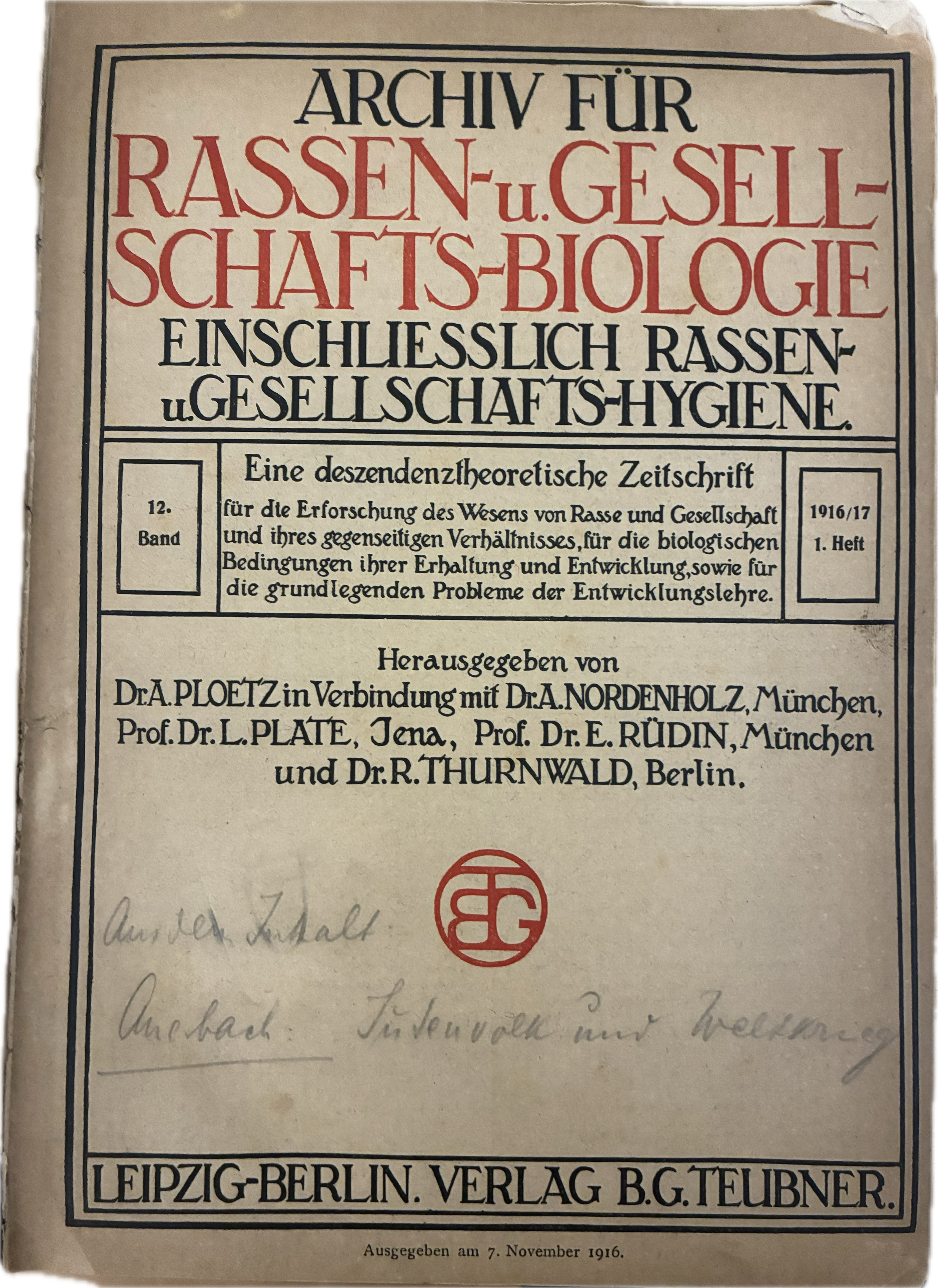
Race Science and the Jewish Question, 1916
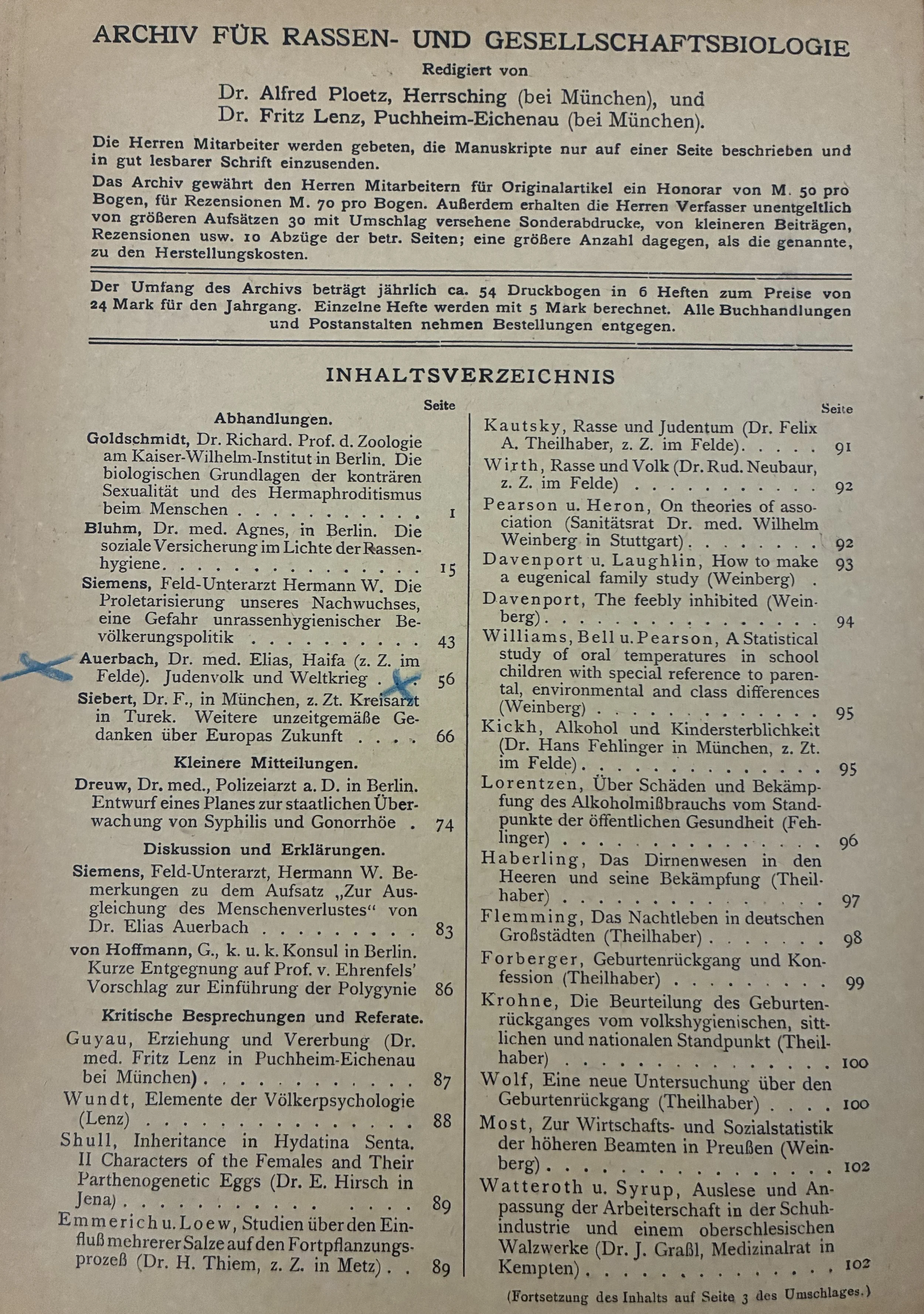
Object type: Scholarly journal
Title: Archiv für Rassen- und Gesellschafts-Biologie einschließlich Rassen- und Gesellschafts-Hygiene (Archive for Racial and Social Biology, Including Racial and Social Hygiene)
Date: November 7, 1916
Place of publication: Leipzig–Berlin, German Empire
Publisher: B. G. Teubner
Language: German
Formerly in the library of: Bibliothek der Jüdischen Gemeinde zu Berlin (Jewish Community of Berlin)
Elias Auerbach, “Judenvolk und Weltkrieg” (The Jewish People and the World War), pp. 56 ff.
How do the Jews, and their relatives at home, regard the great war and its ideas?
Their position among the Central Powers is entirely clear and unambiguous. To the last man, just like every other citizen of these states, they feel that this is a struggle for existence or annihilation, that the struggle concerns the highest aims of national development, and that their own fate is inseparably bound to that of their homelands.
The Jews of these countries—with the exception of Galicia and Turkey—are “assimilated”; they also participate fully in the cultural and political movements of their countries in their daily lives.
The position of Jews on the side of the Entente is far more complicated.
In the days when war broke out, I was traveling on the Mediterranean with two Jewish students from Russia. One declared enthusiastically that Russia was invincible and that he would return immediately to Odessa. The other said only, quietly and fervently: “May God grant that Russia be defeated and destroyed!”
“This, in brief, is the tragic conflict in the hearts of Russia's six million Jews. Despite everything, they love the land in which they were born and raised, and as soldiers, despite all the suspicions and persecutions from the Russian side, they have fully done their duty...
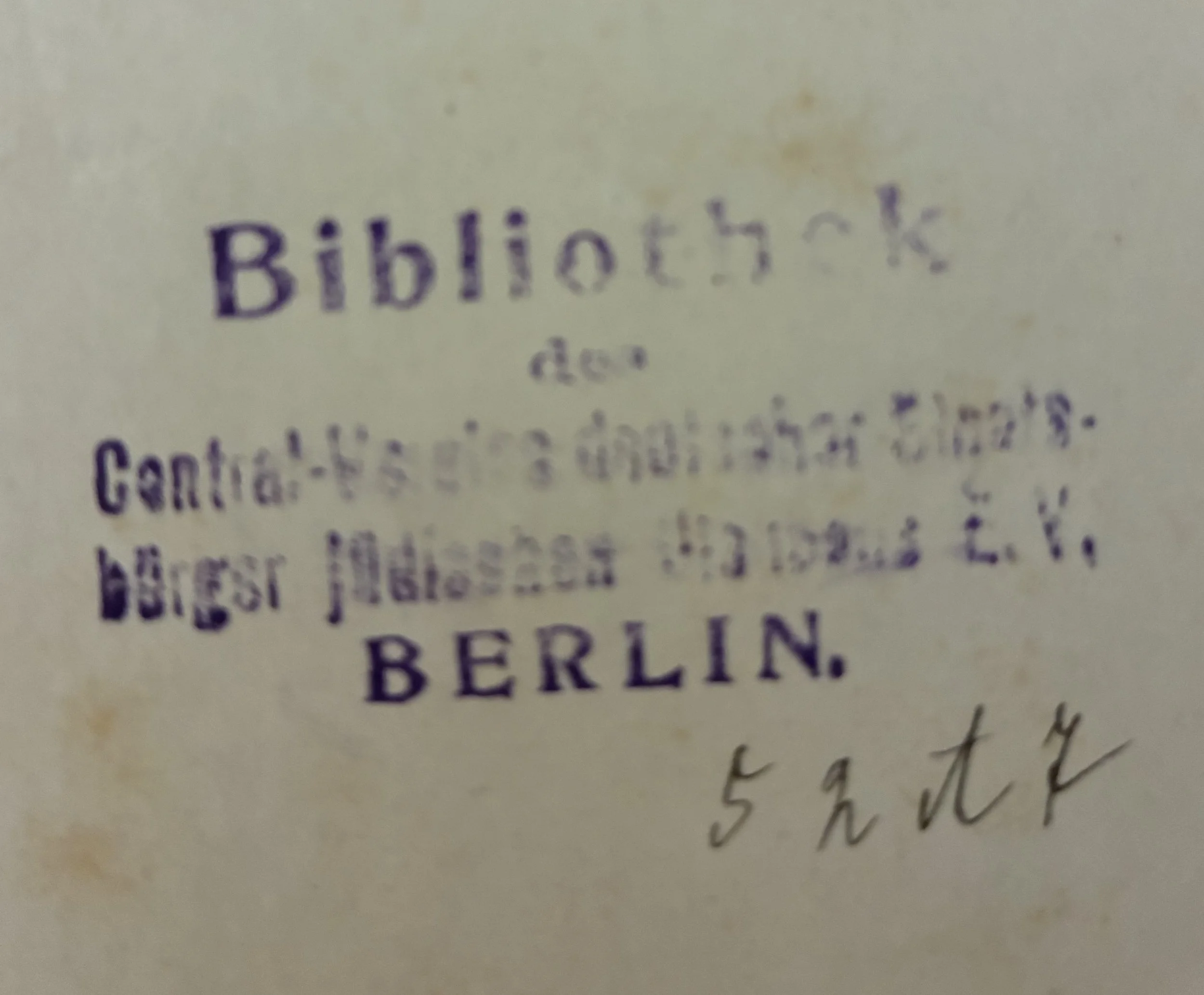
Ownership stamp of the Library of the Jewish Community of Berlin