The Abarbanel Institute believes education should help students frame questions, not supply ready-made answers. We create opportunities for serious intellectual exchange, trusting students to decide where their inquiries lead.
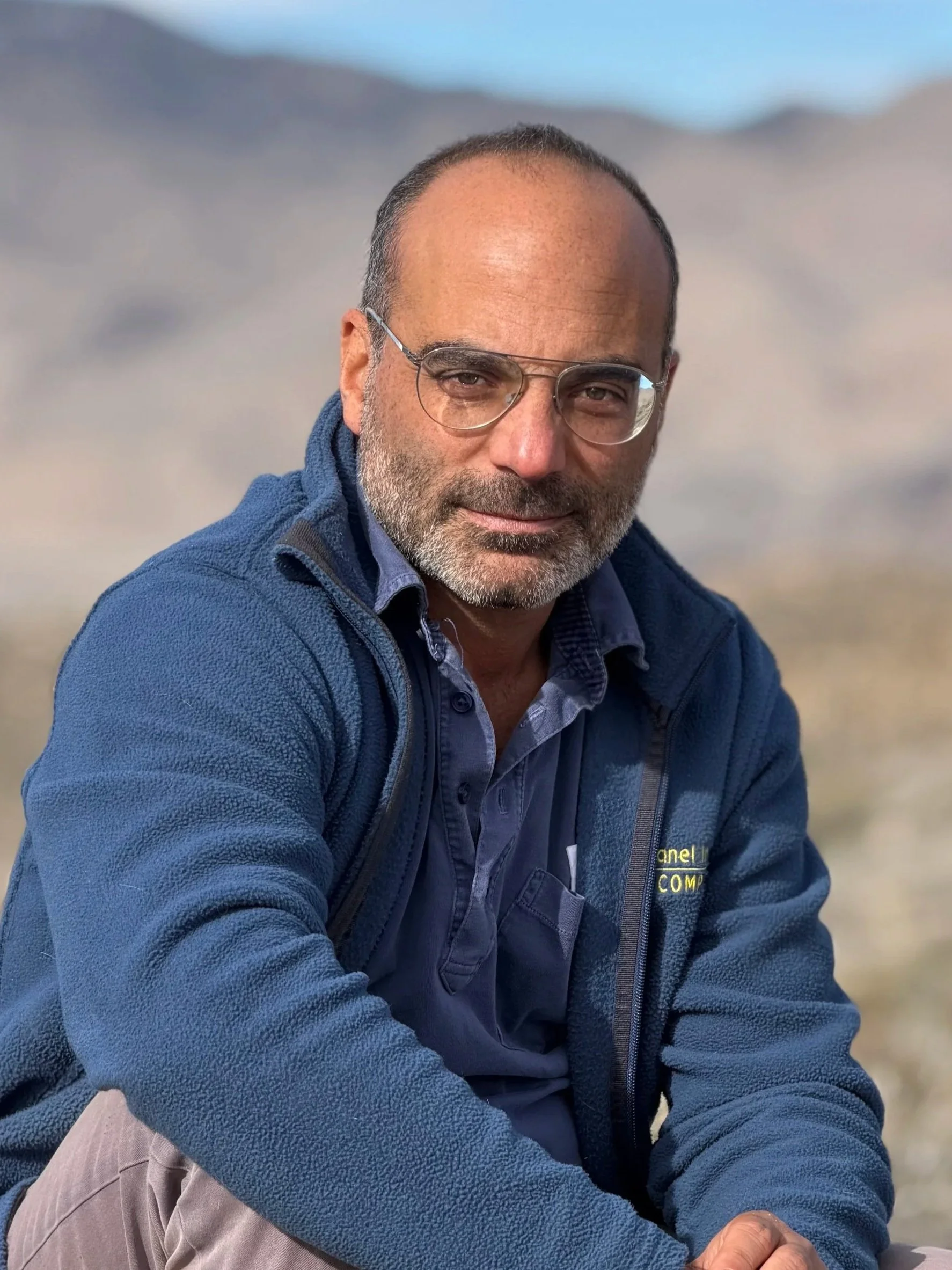
A Message from the Founder
I founded the Abarbanel Institute because I believe that young people should encounter the world before they are asked to make up their minds about it.
The questions facing young Jews today are real and consequential. Honest answers require both conviction and thoughtfulness. While true education can’t provide those answers, it can give young people the knowledge, experience, and intellectual confidence to arrive at convictions on their own—and the humility to reconsider them.
That is why Abarbanel begins with serious books, difficult questions, and encounters with people and places that prepare students to lead thoughtful lives enriched by Jewish tradition. We choose carefully what is worth studying, but we do not tell students what they should conclude from it. At a time when students are increasingly encouraged to pledge allegiance to partisan positions, the Abarbanel Institute offers them an alternative.
Jewish young people should take pride in belonging to an extraordinary people and tradition. The Abarbanel Institute seeks to strengthen ahavat yisrael by grounding it in knowledge, reflection, and understanding. Our hope is that Abarbanel students leave us more knowledgeable and more confident as Jews, but also more curious, more independent, and better prepared to live in a complex world with seriousness, judgment, and courage.
— Aaron Tugendhaft
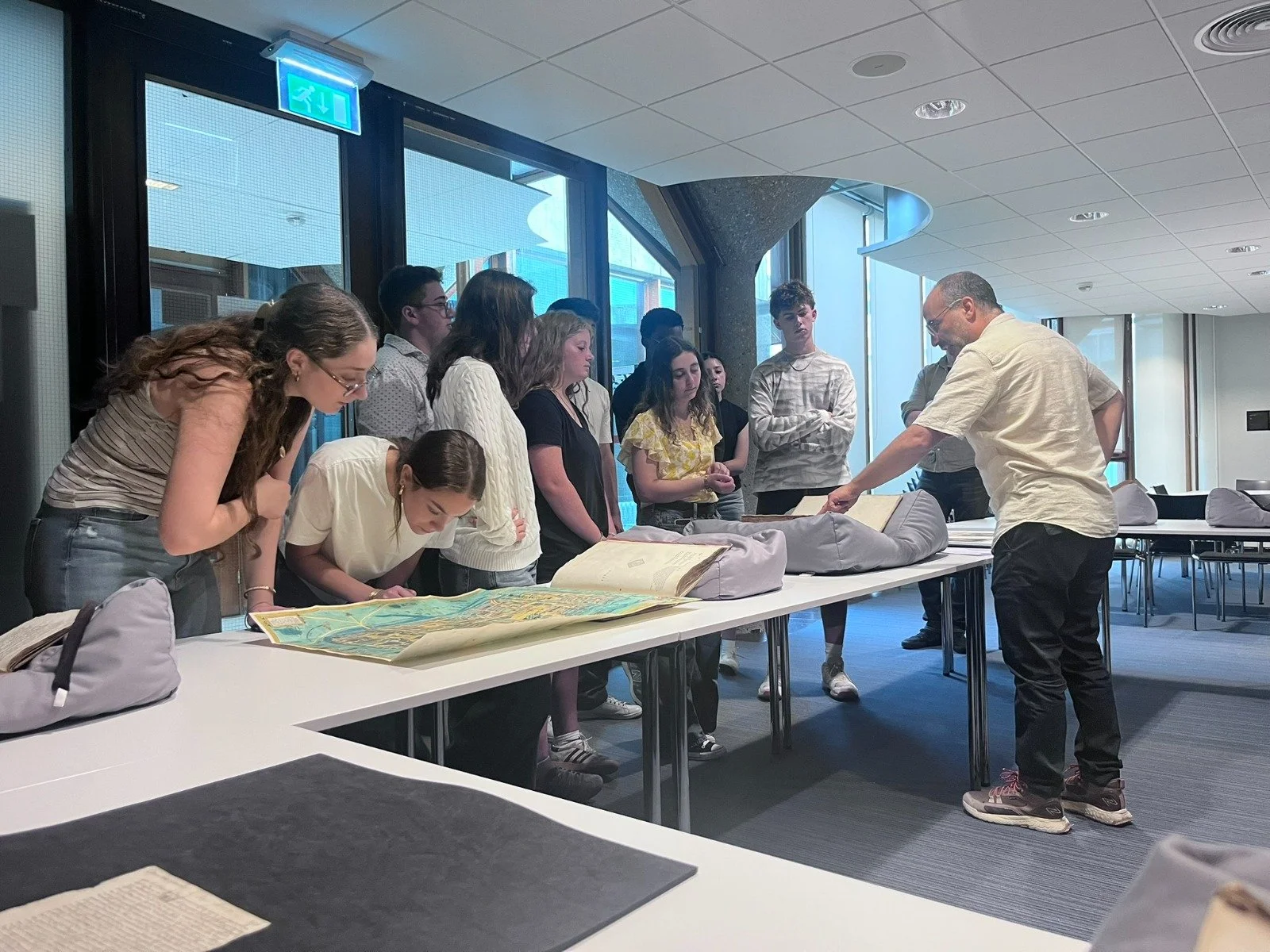
Two essays by the Institute’s founding director explore the educational convictions behind Abarbanel.
On Education
Bookstore or Beis Medresh?
Jewish Review of Books · Spring 2023
On the value of intellectual exploration, the encounter with competing perspectives, and the freedom to find one's own way among books and ideas.
Against Solidarity Statements
Chronicle of Higher Education · Nov 2023
On the dangers of intellectual conformity and the responsibility of teachers to cultivate independent judgment rather than predetermined conclusions.
Board of Directors
-
![Emil Kleinhaus]()
Emil Kleinhaus
BOARD CHAIR
Emil Kleinhaus is a partner at Wachtell, Lipton, Rosen & Katz. A graduate of Yale College and Yale Law School, where he was an editor of the Yale Law Journal, he clerked for federal judges in New York. He serves as a trustee of several educational and nonprofit institutions, including the Ramaz School and the YIVO Institute for Jewish Research.
-
![Aaron Tugendhaft]()
Aaron Tugendhaft
FOUNDER AND PRESIDENT
Aaron Tugendhaft founded the Abarbanel Institute in 2024. He is the Robert Aird Chair of Humanities at Deep Springs College and has taught at the University of Chicago, the University of Texas at Austin, and New York University. Previously, he chaired the History Department at the Ramaz Upper School, where he received the Abraham Pilchik Award for Teaching and Mentorship.
-
![Aaron Greenberg]()
Aaron Greenberg
TREASURER
Aaron Greenberg is a rabbinical student at the Jewish Theological Seminary. Previously, he served as Deputy Director of a workforce development organization in Los Angeles and led the U.S. branch of Bibliothèques Sans Frontières. He has taught at Yale College, Yale-NUS, Wesleyan University, and Deep Springs College, and served three terms on the New Haven City Council.
-
![Aviva Rothman]()
Aviva Rothman
SECRETARY
Aviva Rothman is Associate Professor of History at Case Western Reserve University, where she was the inaugural Dean's Associate Professor in the College of Arts and Sciences. She is the author of The Pursuit of Harmony: Kepler on Cosmos, Confession, and Community and The Dawn of Modern Cosmology: Copernicus to Newton. She also serves on the Board of Trustees of Oheb Zedek Cedar Sinai Synagogue in Cleveland.
-
![Leon Wieseltier]()
Leon Wieseltier
Leon Wieseltier is the editor of Liberties: A Journal of Culture and Politics. He was educated at Columbia and Oxford, where he studied with Isaiah Berlin, and later did advanced work on Jewish history and thought at Harvard. In 1983, he was appointed Literary Editor of The New Republic, a position which he held until 2014. He is the author of Kaddish (1989).
-
![Miriam Krupka]()
Miriam Krupka
Miriam Krupka is Associate Principal at the Ramaz Upper School, where she also chairs the Tanakh/Bible Department. She holds a master's degree in Jewish Philosophy from Columbia University, where she studied the messianic writings of Isaac Abarbanel. She lectures widely on Tanakh, philosophy, and Jewish education, and develops curricula that bring depth and creativity to Jewish learning.
-
![Dave Doneson]()
Dave Doneson
Dave Doneson is CEO of the American Committee for the Weizmann Institute of Science. Previously, he served as Chief Development Officer of the American Technion Society and Director of Development for the University of Michigan Health System. A graduate of the University of Michigan Ross School of Business, he also served in the Israel Defense Forces.
-
![Tamara Tweel]()
Tamara Mann Tweel
Tamara Mann Tweel is a Senior Program Director at the Teagle Foundation, where she works to strengthen civic education. Previously, she founded and directed Civic Spirit. She serves on advisory boards at Princeton University and City College of New York and holds a Ph.D. in History from Columbia University, an M.A. in Theology from Harvard Divinity School, and a B.A. from Duke University.




Why Abarbanel?
Isaac ben Judah Abarbanel knew the world and served the Jewish people.
Born in Lisbon in 1437, Abarbanel was at once a statesman and a scholar, a financier and a biblical commentator. He advised kings and princes while remaining deeply engaged in the life and learning of the Jewish people. When Spain expelled its Jews in 1492, he left with them, eventually rebuilding his life in Italy.
We named the Institute for Abarbanel because he represents a kind of Jewish life we hope our students will make their own: deeply rooted without being insular, at home in the Jewish tradition while curious about the wider world.
Abarbanel did not have the luxury of choosing between Jewish life and the complexity of the world around him. Neither will our students. They will encounter people whose convictions differ from their own, institutions they must learn to navigate, ideas that challenge what they believe, and circumstances for which no inherited answer is entirely sufficient.
Education should prepare them for that encounter. We want Abarbanel Scholars to know their tradition well enough to draw strength from it, to know the world well enough to move confidently within it, and to possess the judgment to meet complexity without retreating from it.
That is what it means, for us, to embrace complexity.
